
Pull-out shelf load capacity is not one number that applies to every shelf and cabinet. It depends on which component has a rating, the specific product configuration, how the load is arranged, and what the existing cabinet can support. Before choosing a pull-out for cookware, pantry supplies, bathroom items, or tools, identify what you plan to store and ask how the stated capacity applies to that installation.
Book a free consultation today
Why can a pull-out have more than one load rating?
A pull-out assembly is a group of parts. Slides support movement, the shelf or drawer holds the items, and the cabinet and its attachment points provide the surrounding structure. A specification for one part does not automatically describe the capacity of every part or of the complete installed assembly.
Shelf Proz describes its Shelf Pro system with heavy-duty stainless undermount slides. The site states that the slides are rated over 130 pounds and that fully extended shelves are rated over 125 pounds. These are separate product claims about different components. Neither number should be treated as a universal capacity for every shelf, cabinet, room, or installation. Ask which component a figure applies to and whether it matches the exact configuration being considered.
Ratings can also depend on how a product is tested and specified. For example, the University of Oregon’s laboratory construction standards list different shelf-standard and bracket load ratings for different shelf depths. That document concerns laboratory fixtures rather than household pull-outs, but it illustrates why a capacity figure needs its product and configuration context: University of Oregon laboratory construction standards.
What do you plan to store?
Start with a practical inventory rather than guessing at a weight limit. Note the heaviest items, how many will be stored together, and whether you expect to pull the shelf out while carrying something. A shelf for light packages has a different job from one used for a concentrated stack of cookware or tools.
- Kitchen and pantry: List pots, pans, dishes, small appliances, canned goods, and other supplies. Note which items are heavy or awkward to lift, and whether you want them on the same pull-out.
- Bathroom: Consider toiletries and household supplies, including larger containers that may be hard to reach at the back of a deep cabinet.
- Garage: Group tools and hardware by type and approximate quantity. Do not assume a cabinet designed for household storage is automatically suited to every tool load.
This inventory is a planning aid, not an engineering calculation. If you do not know an item’s weight, write down the item and quantity or take a photo. Explain whether the load will stay on the shelf or whether you regularly move items while it is extended. For kitchen and pantry planning, explore kitchen organization options and pantry organization ideas.
How should you compare capacity claims?
When comparing products or configurations, look beyond the largest number in an advertisement. Ask for the rated component, the conditions behind the rating, and the configuration covered. A stated maximum may relate to a slide, shelf construction, mounting method, or extension. The manufacturer’s or installer’s guidance for the actual product is the relevant reference; a general capacity figure is not a substitute for considering the cabinet and installation.
Here is a useful way to organize the questions:
- What is rated? Confirm whether the figure applies to a slide, shelf, drawer, or complete assembly.
- Which configuration? Ask whether the rating applies to the proposed dimensions and whether it changes when the shelf is fully extended.
- What supports it? Ask how cabinet condition, mounting surfaces, and attachment points are considered.
- How should items be arranged? Ask whether the system has guidance for distributing heavier items across the shelf.
Do not infer that the cabinet itself can bear the same weight as a slide rating. Also, capacity alone cannot tell you whether items will fit, whether the shelf clears the door, or whether hinges or a center stile affect the design.
What should you measure before a consultation?
Measurements and photos help make the first discussion more specific, but they do not confirm fit on their own. Cabinet dimensions, hinges, a center stile, plumbing, and the condition of mounting surfaces can affect the design or installation method. Gather the following information:
- Identify the cabinet and describe what it stores now.
- Measure the available interior width, depth, and height. Record where you measured and any obstructions.
- Take clear photos with the cabinet door open. Include hinges, interior sides, and a center stile if present.
- List the items you hope to store, calling out unusually heavy or bulky ones.
- Ask which shelf or drawer configuration is being considered and which component ratings apply to it.
- Ask whether the cabinet may need preparation or whether a feature inside it changes the installation approach.
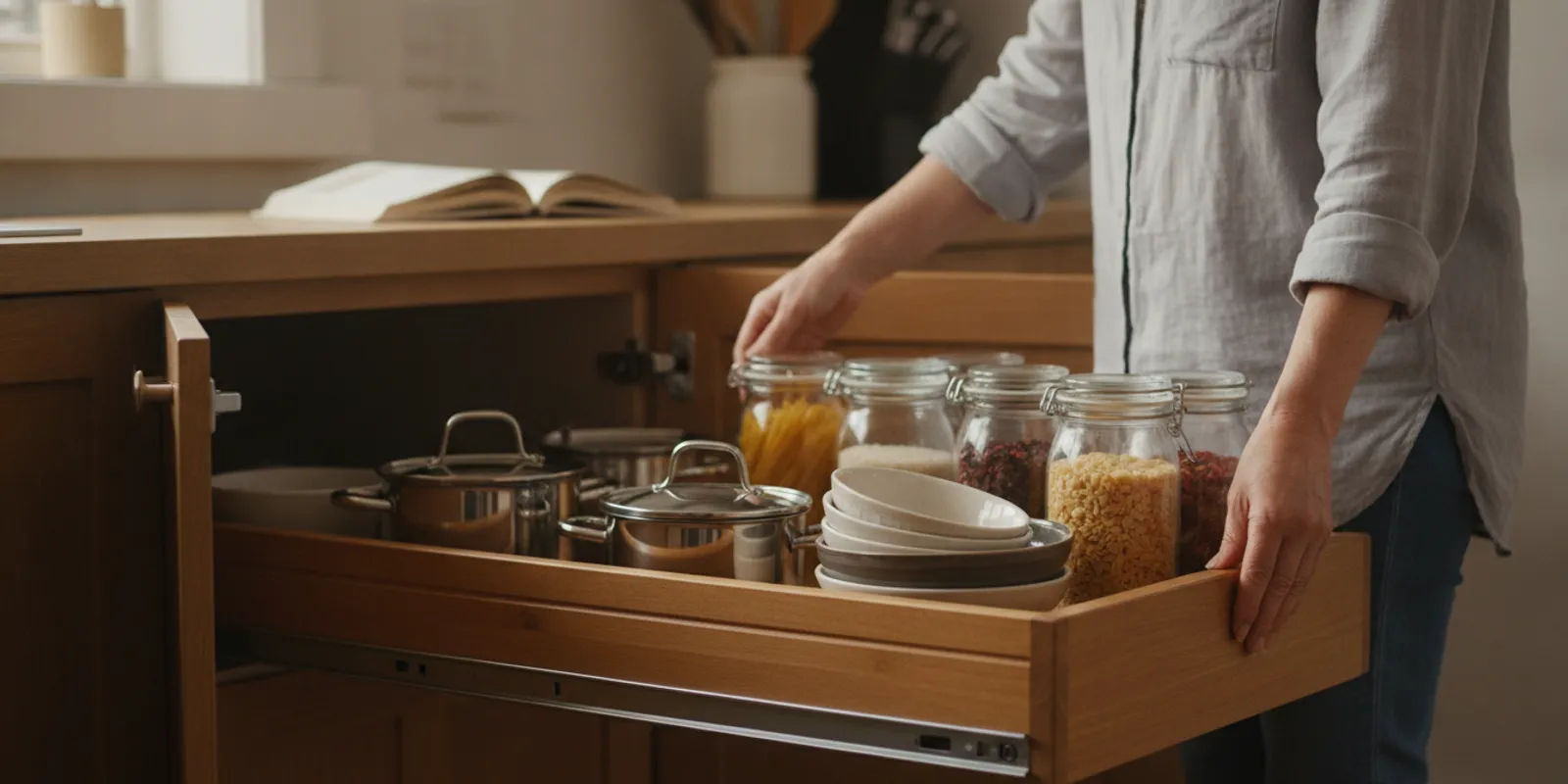
For example, imagine that a homeowner wants a pull-out for a stack of cookware and a small appliance. The useful consultation is not simply “Can it hold 125 pounds?” The homeowner can share the cabinet’s measurements and photos, describe how the items will be arranged, and ask whether the shelf rating applies to the proposed fully extended configuration and how the cabinet mounting is assessed. That gives the discussion concrete details without pretending that a rough inventory determines a safe capacity.
See pull-out shelf options and pull-out drawers as you consider which format may suit the items and cabinet. A consultation can help identify what additional measurements or details are needed for a custom-fit solution.
What should you avoid assuming?
Do not assume that the highest number shown for a slide also describes the shelf, or that the shelf figure applies to every room and load pattern. Do not treat either published Shelf Pro figure as the capacity of every installed system. Likewise, do not assume a rating means every cabinet can carry that load or that your items will clear the door.
Stay within the applicable product guidance and avoid overloading. Arrange heavier items securely and follow the directions for the particular system. If you are comparing configurations, ask for the specification that applies to the specific shelf and installation rather than choosing by the biggest number alone.
Plan around your cabinet, not just a number
Load capacity is one part of choosing a pull-out. The discussion should also cover what you want to store, how you access it, the cabinet’s dimensions and condition, and the components proposed. Shelf Proz offers custom-fit storage for existing cabinets; the layout and fit need to be considered for the individual cabinet rather than assumed from a general rating.
Book a free consultation today
Bring cabinet measurements and photos, along with a list of the items you plan to store, and ask how each stated rating applies to the specific configuration being considered.