
When comparing cabinet refacing vs pull-out shelves, start by asking what you want to change: the visible cabinet surfaces or the way you reach items inside. Refacing focuses on the cabinet exterior; pull-out shelves change how stored items move into view. The right choice depends on the condition of the cabinets and the daily frustration you want to solve.
Book a free consultation today.
By Paul Porreca, President and Owner
These are different kinds of projects, not competing versions of the same fix. A new-looking door will not automatically make a deep cabinet easier to reach. A pull-out shelf can improve access without changing the cabinet’s visible style. Some homeowners may want to consider both, but first it helps to separate the goals and check whether the existing cabinet can support the plan.
What does cabinet refacing change?
Cabinet refacing generally means changing some of the visible exterior of existing cabinets. Depending on the contractor’s definition and the project scope, that may involve replacing doors and drawer fronts, applying a new finish or veneer to visible cabinet surfaces, and updating hardware. Details vary, so ask precisely which components are included before comparing proposals.
The main purpose is a different appearance. Refacing may be worth exploring when cabinet boxes are in usable condition but the doors, fronts, finish, or style no longer suit the room. It does not, by itself, mean the interior layout will change. A shelf that sits far back may remain far back, and the arrangement of stored items may stay much as it is now.
It is also important not to treat “refacing” as a universal package. One provider may include certain visible panels or hardware while another may define the scope differently. Review the written description, ask what stays in place, and make sure you understand whether any interior storage changes are part of the work or separate.
What do pull-out shelves change?
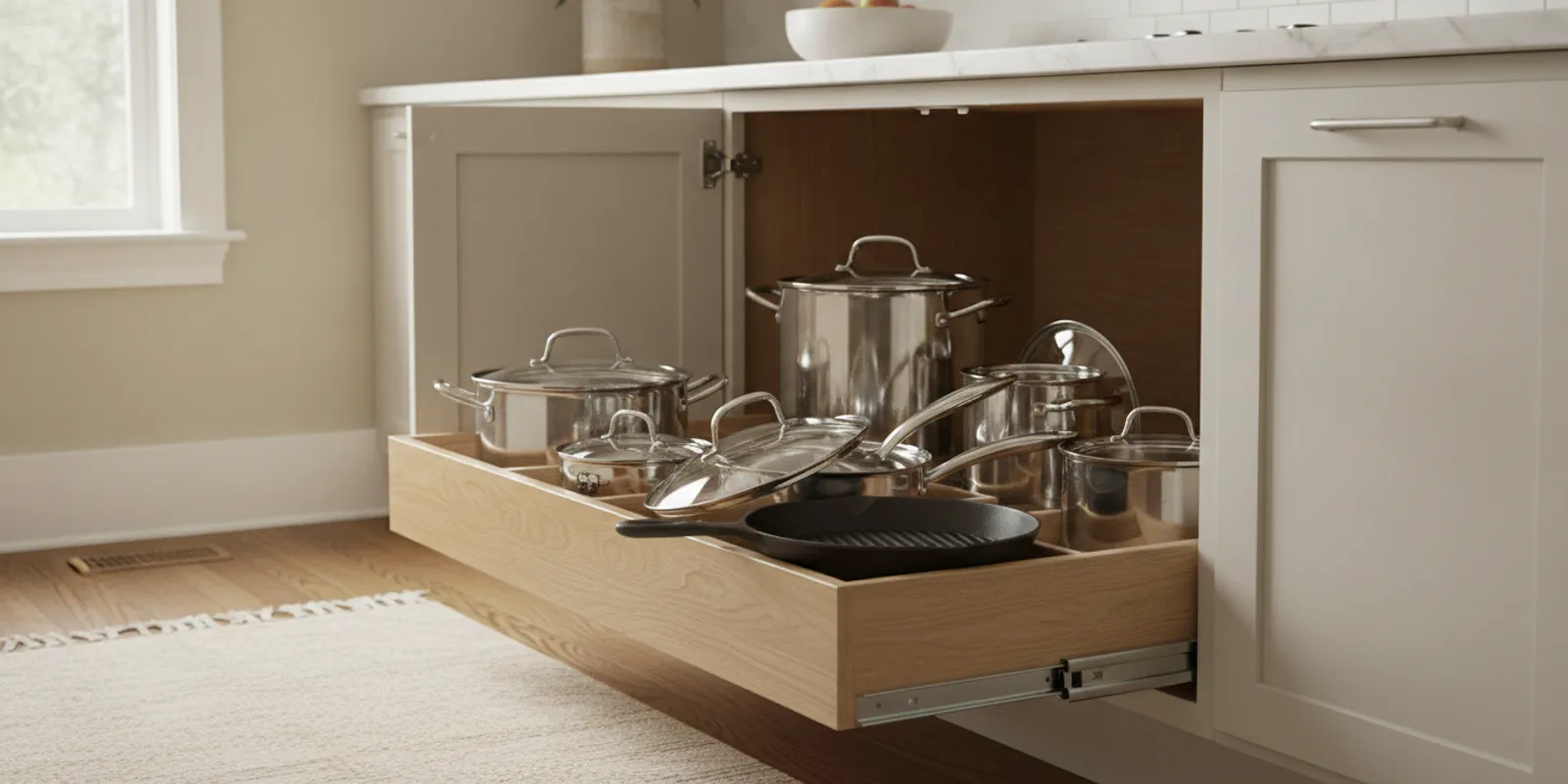
A pull-out shelf is fitted inside an existing cabinet and slides outward so stored items can be brought closer. Rather than reaching over items at the front to find something at the back, you can pull the shelf toward you and view more of what is stored there. Pull-out drawers offer a contained storage option for some items; the best configuration depends on the cabinet and what you plan to keep inside.
This approach focuses on access and organization, not a new exterior look. A homeowner can often retain the current cabinet doors and finish while improving the way a particular cabinet is used. Learn more about pull-out shelves for existing cabinets and pull-out drawers to understand the different storage approaches.
Shelf Proz works on residential cabinet organization, including custom-fit pull-out shelves, drawers, and storage for existing cabinets. It is not a cabinet-refacing contractor. The company’s custom storage solutions are intended to address how household cabinet space is organized and accessed; they should not be confused with changing cabinet doors or finishes.
How do the two options compare?
The table below is a starting point for a conversation, not a substitute for an on-site assessment or a written project scope. “Refacing” can mean different things from one contractor to another, and a pull-out’s fit depends on the actual cabinet and proposed configuration.
| Question | Cabinet refacing | Pull-out shelves |
|---|---|---|
| What is the main focus? | Visible cabinet surfaces, doors, or drawer fronts, as defined in the contractor’s scope. | Access to items stored inside a cabinet. |
| What might look different? | The exterior appearance may change if those surfaces are included. | The cabinet’s exterior may remain as it is; the interior storage arrangement changes. |
| Does it bring items forward? | Not inherently. Ask whether interior organizers are separately included. | A shelf or drawer is designed to move outward, subject to fit and configuration. |
| What should be checked? | Which doors, fronts, finishes, panels, and hardware are included, and what remains unchanged. | Opening dimensions, cabinet construction, hinges, center stiles, nearby obstructions, and intended contents. |
| What information helps with planning? | Photos of the cabinet fronts, a description of the desired appearance, and a clear scope. | Photos and measurements of the cabinet opening and interior, plus a list of what you store. |
| Can they be considered together? | Possibly, if both appearance and interior access are goals; ask each provider to define its own work and coordination. | |
How might the choice look in everyday use?
Consider a lower kitchen cabinet that holds pots and pans. If the doors and finish still suit you but reaching the cookware at the back is awkward, changing the visible exterior would not directly address that daily task. A pull-out shelf might bring the cookware into view, if the cabinet can accommodate the proposed design. The useful question is not simply whether the cabinet looks old; it is whether the interior arrangement is causing the problem you want to fix.
Now consider a cabinet whose contents are easy enough to reach, but whose doors are damaged or whose finish no longer fits the room. Interior organizers may add storage convenience, but they would not create the exterior appearance change you are looking for. A refacing provider can explain what visible elements could be changed and what condition the cabinet boxes need to be in for the proposed scope.
In a pantry, the two goals may overlap. You may want a fresher exterior while also wanting food and small appliances arranged so they are easier to find. Write those goals down separately. Then ask whether the storage plan can be assessed alongside the exterior work, or whether the providers need to plan their work independently. Do not assume that one quote includes both.
Bathroom cabinets can present a similar distinction. If your aim is a different style, ask about visible surfaces and finishes. If daily products are difficult to see or retrieve from a deep cabinet, explain that access problem to a cabinet-organization provider. A photo of the open cabinet and the items you intend to store can make the conversation more concrete, while an in-person assessment may still be needed.
How can you plan the decision in manageable steps?
- Choose one starting cabinet. Select a cabinet where the problem is easy to describe instead of trying to plan the entire kitchen at once. Note what you store there and which part of the current arrangement does not work for you.
- Name the outcome. Use a short, practical description such as “I want to change the visible doors” or “I want to bring cookware forward.” If both statements are true, keep both goals on the list.
- Separate the scopes. Ask a refacing provider to define the exterior work. Ask a cabinet-organization provider to assess interior access. Confirm whether either proposal includes the other type of work; do not infer that from a general project label.
- Gather comparable information. For each proposed project, request a written description of the areas addressed, included materials or components, installation, and any exclusions. Ask what assumptions the quote makes about the cabinet’s condition and dimensions.
- Decide what to do now. You may choose to proceed with one goal first, continue gathering information, or assess whether doing both makes sense. Make that decision after you understand the scope and coordination, not because one solution is assumed to solve the other problem.
This process also helps avoid paying attention to the wrong comparison. A quote for a visual update and a proposal for interior pull-outs address different outcomes, so comparing only their totals may not tell you which one better meets your goal. First compare scope and expected change; then consider the quote and timing in the context of the work included.
Which problem are you trying to solve?
Before choosing a project, identify the specific cabinet and the moment that causes trouble. Do you dislike how the doors or finish look, or do you have to move several items to reach what you need? Are both concerns present? A clear answer keeps a conversation focused on the improvement you actually want.
- If the exterior is the issue: Note which doors, drawer fronts, or visible surfaces bother you. Ask a refacing provider what its work changes and what it leaves in place.
- If reaching stored items is the issue: Identify the cabinets where items are hard to see or retrieve. Consider whether a pull-out shelf, a drawer, or another arrangement is worth assessing.
- If both matter: Treat appearance and access as separate decisions. Ask whether the work can be coordinated, whether one step affects the other, and which provider is responsible for each part.
For kitchen and pantry questions, Shelf Proz’s kitchen organization information is a useful place to explore the cabinet-access side of the decision. The same distinction applies in a bathroom: a new exterior look and easier access to items inside are not the same outcome. You can review options for bathroom cabinet storage separately.
What should you check before asking about a pull-out?
Do not assume every cabinet can take the same organizer or that a particular shelf will fit based on a quick visual guess. Cabinet openings and interiors vary. Details such as a center stile, hinges, plumbing, or other obstructions can affect the available space and design. A measurement or photo helps start the discussion, but it does not confirm fit on its own.
For each cabinet you want to discuss, gather the following information:
- Identify the cabinet. Note whether it is in the kitchen, pantry, bathroom, or another room. Say whether it is a lower or upper cabinet and what you currently store there.
- Photograph the opening. Take a clear picture with the door open and, if helpful, another with it closed. Include the hinge area, any center divider, and visible obstructions in the frame.
- Record useful dimensions. Measure the opening width and height, then the usable interior width, depth, and height. Keep the units consistent and note exactly where you measured. If you are unsure, label the measurements as approximate rather than presenting them as a confirmed fit.
- Note anything that could affect movement. Mention hinges, a center stile, plumbing, wiring, a nearby appliance, or items that project into the cabinet. Do not remove or alter cabinet parts just to take a measurement.
- Describe the items and routine. List the items you want to store and what you reach for most often. This helps frame whether a shelf, a drawer, or a different arrangement should be considered.
Photos and measurements are planning information, not a promise that no cabinet adjustment will be needed. A consultation can help determine what further inspection is appropriate and whether the proposed storage is suitable for that cabinet. For examples of the company’s work, you can also browse the project photos; examples are not a guarantee that your cabinet has the same dimensions or construction.
What questions should you ask before comparing proposals?
For a refacing quote, ask which surfaces and components are included, what remains unchanged, whether hardware is part of the scope, and how the provider will describe the finished work. If you are also considering interior storage, ask whether it is included or needs a separate assessment. A clear written scope makes it easier to compare proposals fairly.
For a pull-out storage conversation, ask which cabinets are being evaluated, what measurements are needed, what design is proposed, and whether the quote includes the organizer, installation, or other work. Ask what could affect fit and whether any cabinet changes may be required. Avoid comparing a drawer-only or product-only figure with an installed project total unless the inclusions match.
Also ask about any applicable warranty and what it covers. The Shelf Proz website describes a materials warranty for drawers, slides, and grids, with terms available on request; that does not mean installation or every service is covered for life. Request the applicable terms for the specific product and work being discussed.
For wider kitchen-planning considerations, homeowners can consult the National Kitchen & Bath Association. For a cabinet-access project, however, the most useful next step is to assess the actual cabinet, its contents, and the goal for that space.
When should you ask for measurements or photos?
Ask for an assessment when you have identified one or more cabinets that are difficult to use and want to know whether a custom-fit pull-out might help. Photos and measurements can make the first conversation more specific, especially when the cabinet has an unusual opening or visible obstruction. If you are deciding between refacing and interior storage, show both the exterior and the inside so the two different goals can be discussed clearly.
If your main concern is the cabinet’s appearance, speak with a refacing provider and request its definition of the work. If your main concern is reaching what is stored inside, a cabinet-organization consultation is the relevant discussion. You can request a free consultation from Shelf Proz to talk about existing cabinets and possible storage options. Availability and fit should be confirmed for your particular project rather than assumed from a general description.
Book a free consultation today.
Frequently asked questions
Does refacing make the inside of a cabinet easier to reach?
Not by itself. Refacing usually addresses visible surfaces, doors, or drawer fronts, depending on the provider’s scope. Ask whether interior organizers are also included. A pull-out shelf is a separate type of improvement focused on bringing stored items outward.
Can pull-out shelves be installed without changing the cabinet doors?
That may be possible in some cabinets, but it should not be assumed for every opening. Fit depends on the cabinet’s dimensions, construction, hinges, and obstructions. Share photos and measurements and ask for an assessment before deciding.
Should I reface first or add pull-outs first?
There is no single sequence for every home. First clarify the scope of each project and ask the providers whether one type of work affects the other. If you are considering both, having the cabinet and proposed changes assessed together can help you understand coordination needs before approving either scope.
What is the difference between a pull-out shelf and a pull-out drawer?
Both are storage options that move outward, but their construction and how they contain items differ. The right option depends on what you plan to store and the cabinet’s usable space. Ask for recommendations based on that cabinet rather than assuming one format suits every item.
Make the choice cabinet by cabinet
Cabinet refacing is primarily about visible surfaces; pull-out shelves focus on access inside existing cabinets. If appearance is the concern, get a clearly defined refacing scope. If reaching items is the concern, collect photos and measurements and ask whether a custom-fit storage option may suit the cabinet. When both goals matter, discuss them separately and confirm each provider’s work before moving ahead.
A thoughtful decision starts with the cabinet you use every day, the change you want, and a clear understanding of what each proposal includes.