
Custom cabinet storage can make existing cabinets easier to use without assuming a full remodel. The right organizer depends on what you store, how often you reach for it, and the cabinet’s actual dimensions. Start with the kitchen and bathroom, where daily items can be awkward to reach, then consider pantry and garage cabinets if they have a clear, recurring storage problem.
Book a free consultation today
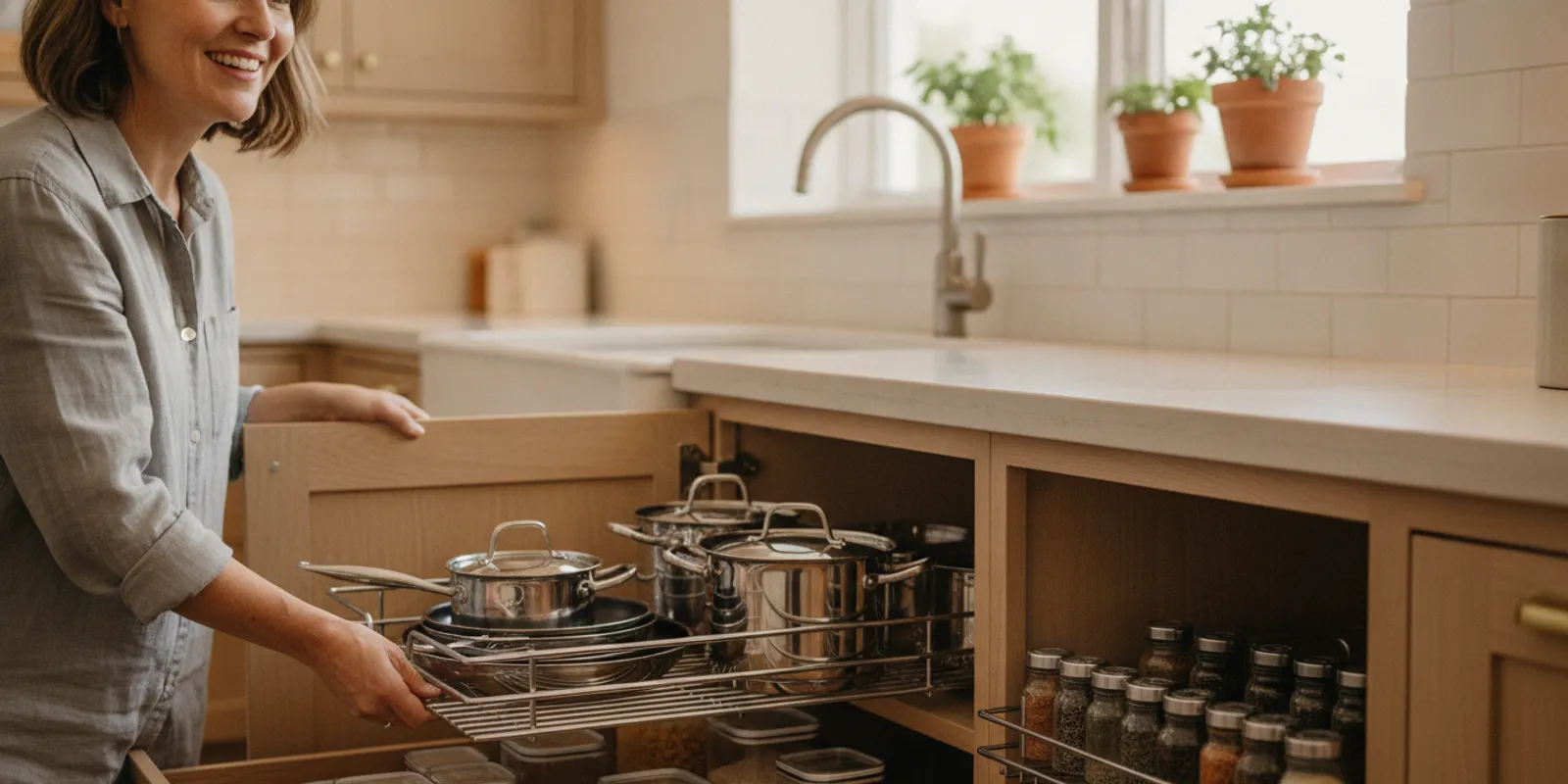
A helpful plan is not just a list of products. It ties a storage change to a particular cabinet, checks the space and obstacles before selecting hardware, and sets a clear project scope. Shelf Proz focuses on custom-fit pull-out shelves and drawers for existing residential cabinets. Bring your goals and whatever measurements or photos you have; ask whether service is available for your city or ZIP before assuming it is.
What should custom cabinet storage solve?
Begin with the frustration, not the product. Is the item you need always at the back? Do cookware and lids pile up together? Are small bathroom products hard to find? A different problem may call for a different arrangement, and some cabinets may not need a change at all.
- Hard-to-reach items: A pull-out shelf can bring contents toward the cabinet opening, making it easier to see what is stored behind other items.
- Small items that shift: A pull-out drawer can keep related items together and make a group easier to access.
- Different item heights: An adjustable layout may be worth discussing if the stored items vary. Shelf Pro is described as a behind-the-door pull-out system with shelves that adjust in two-inch steps.
- Unclear capacity: Check the usable interior and obstacles before choosing a configuration. Exterior cabinet width alone does not establish fit.
Write down what belongs in the cabinet, how often you use each item, and what you want to reach first. A shelf that works for mixing bowls may not suit spice containers. Daily bathroom products may need a different arrangement from occasional-use supplies. That brief list helps turn a general wish for “more organization” into a specific question: what should change in this cabinet to make a routine easier?
How do custom cabinet organizers compare?
Custom cabinet storage is a broad description, not one universal organizer. Use this comparison to frame a discussion. It does not establish fit, pricing, or which configuration will work in a particular home.
| Option | May help with | Check before choosing |
|---|---|---|
| Pull-out shelf | Reaching cookware, food containers, or supplies stored toward the back | Interior width, depth, height, door opening, hinges, and obstructions |
| Pull-out drawer | Grouping smaller items or containing items that otherwise shift | Drawer dimensions, quantity, materials, configuration, and intended use |
| Height-adjustable pull-out | Changing shelf positions to suit different stored items | Whether the described system and its layout suit that cabinet |
| Existing fixed shelf | Storing items that are already easy to see and retrieve | Whether a change would solve a real, repeated problem |
One solution need not be used throughout the home. A homeowner might discuss pull-out shelves for a kitchen base cabinet, a drawer for bathroom essentials, and leave cabinets that already work alone. Review pull-out shelf options, pull-out drawers, and the height-adjustable pull-out system to understand the options being discussed.
How can you plan kitchen and pantry storage?
Kitchen cabinets often hold a mix of heavy, bulky, and frequently used items. Identify each cabinet’s job before measuring. One may hold pots and pans; another may store food or small appliances. Keep items used every day in the easiest-to-reach locations when the layout permits, rather than placing them behind rarely used items.
- Choose one cabinet to assess. Record its current contents and the task that feels difficult. “Pots are hard to reach” is more useful than “the kitchen is cluttered.”
- Group related items. Separate cookware, food, dishes, and small appliances. A storage change is easier to assess when the intended contents are clear.
- Note dimensions and obstacles. Measure the usable interior and note hinges, a center stile, plumbing, trim, or other features that may affect fit or movement.
- Check vertical clearance. Consider the tallest stored item, the shelf above it, and whether you need to change shelf positions over time.
- Decide what should remain as it is. Not every cabinet needs a pull-out. Preserve a workable arrangement if it already meets your needs.
For example, suppose a base cabinet holds a stockpot, a stack of pans, and lids that are difficult to retrieve. First check whether the pieces can be grouped without stacking the items you use most behind others. Note the widest and tallest pieces and inspect the cabinet opening. A pull-out shelf might be a subject for discussion if the problem is reaching the back, while a drawer may be worth discussing if the priority is keeping smaller pieces together. Neither choice should be treated as a fit guarantee based on the list alone.
Pantry planning also starts with actual packages, not a picture-perfect arrangement. Group food by use, note tall or wide containers, and think about whether a pull-out would help you see items at the rear. Check the cabinet depth and door opening, and consider whether the contents change often. Browse kitchen organization ideas and pantry organization while deciding which cabinets deserve attention first.
What should you consider in a bathroom cabinet?
Bathroom storage has different constraints from kitchen storage. Toiletries and daily essentials may be small, while plumbing can occupy part of the cabinet interior. Sort contents into daily-use and occasional-use groups. Then consider whether a shelf or drawer could make the daily group easier to find without crowding the space.
As a practical example, list the products used each morning and evening, then check whether the current difficulty comes from depth, clutter, or limited usable space around plumbing. If the products are scattered, a drawer may be a useful option to discuss. If items are orderly but the ones at the back are difficult to reach, ask whether a pull-out shelf is suitable. Keep cleaning supplies and personal-care products separate if that better suits how your household uses the cabinet; do not force unrelated items into one organizer just to fill it.
Do not assume an organizer will fit or that plumbing and hinges will not matter. Take clear photos of the interior, including the cabinet floor, sides, and opening. A bathroom storage solution should be considered in light of the actual cabinet, not just its outside appearance. Shelf Proz also describes bathroom pull-out shelves and bathroom pull-out drawers.
When a project is being planned around accessible reach, distinguish a helpful storage idea from a formal accessibility requirement. The U.S. Access Board publishes accessibility standards and guidance at Access-Board.gov. Those resources have specific scopes; they do not by themselves determine whether a particular private-home cabinet or organizer meets a requirement. Discuss the household’s needs and the actual cabinet dimensions before settling on a layout.
How should you assess a garage cabinet?
Garage storage can be considered after the kitchen and bathroom priorities. List the tools or supplies to store and separate items that are heavy, oversized, or used only occasionally. Check each cabinet’s interior and consider whether a pull-out would make contents easier to see and retrieve. Do not assume that one design suits every tool or cabinet.
For instance, if small hand tools and containers are mixed together, first decide whether they belong in one cabinet and what should be reached most often. If the problem is reaching past other items, discuss access; if the challenge is keeping small pieces together, ask whether a drawer fits the intended use. Be clear about unusually heavy or awkward items and ask what the specific product is intended to hold. Do not apply a rating for one component or configuration to every shelf or room.
Review garage storage and organization and garage pull-out shelves to understand the type of storage discussed. Fit, installation, and service-area questions should be confirmed for the specific project.
What measurements and details should you bring?
Useful information can make a consultation more specific, but measurements alone do not guarantee that an organizer will fit. Bring what you can and identify uncertain dimensions instead of guessing.
- Interior width, depth, and height. If the cabinet seems uneven, measure at more than one point.
- Photos with doors open, including the cabinet floor, sides, hinges, and any center stile.
- A list of intended contents, including unusually tall, wide, or heavy pieces.
- How often you use the items and which ones you want easiest to reach.
- Details about plumbing, wiring, trim, or features inside or around the cabinet.
- The number of cabinets you are considering and which room matters most.
- Questions about who will measure and install, what the estimate includes, and whether the address is within the service area.
If measuring is difficult, say so rather than filling in a number by eye. Shelf Proz describes a process that includes a consultation, measurement and custom design, followed by professional installation where arranged. Ask what applies to your project. Pictures can help explain the obstacles, but they should not be treated as a substitute for measurements or a fit assessment.
How can you compare options cabinet by cabinet?
A decision list can prevent a whole-home project from becoming vague. For each cabinet, note the problem, the items to store, the access you want, and the question that still needs an answer. Then compare a proposed solution with those needs, rather than choosing by appearance alone.
| Cabinet note | Example entry | Why it helps |
|---|---|---|
| Current frustration | Frequently used pans are difficult to reach | Identifies the repeated task to address |
| Contents and use | Three pans, lids, daily use | Clarifies what the organizer needs to accommodate |
| Space details | Measure opening and interior; note hinges or center stile | Flags details that may affect the design |
| Open question | Would a shelf or drawer better serve this cabinet? | Gives the consultation a specific decision to resolve |
Consider a home where one kitchen cabinet is difficult because cookware sits at the back, while a bathroom cabinet is frustrating because small products are scattered. The kitchen question may be whether a pull-out shelf improves access; the bathroom question may be whether a drawer would group essentials. Those are starting points, not promises of fit. A center stile, tight clearance, or plumbing may change the design or installation approach. It is also reasonable to decide that a cabinet does not need an organizer if its contents are already easy to manage.
You can explore custom storage solutions and the services overview to understand the residential cabinet-organization scope. These pages can help you prepare, but the useful comparison is still the one between your cabinet’s actual problem and the proposed change.
What should you ask about project scope and cost?
A clear proposal should make it understandable what is being considered and what remains uncertain. Ask questions before agreeing to a configuration:
- Which cabinets and rooms are included?
- What type of pull-out or drawer is proposed for each cabinet, and why?
- What measurements or photos are still needed to assess fit?
- Are grids, slides, drawers, shipping, and installation separate parts of the total?
- What materials warranty applies to the specific products, and what does it exclude?
- Is professional installation available for my city or ZIP, and what does it include?
The site’s FAQ gives approximate examples for individual drawers: about $80 for a small drawer and $150 or more for a large one. Those amounts vary by size, materials, quantity, and finish; they are not a project price. Grids and slides are separate in the Shelf Pro Kit, shipping is extra, and installation cost varies by cabinet and installer. No kit price or shipping rate is stated here. Request a free estimate for your own scope instead of treating a drawer example as the total.
The site describes Shelf Pro drawers as Baltic birch with dovetail joints, grids as melamine with a Hard Rock Maple finish, and slides as heavy-duty stainless undermount slides. It also describes the system as a behind-the-door pull-out whose shelves adjust in two-inch steps. These are descriptions of the named system, not guarantees that a particular configuration suits every cabinet. The site gives different load figures for slides and fully extended shelves; do not treat them as interchangeable or apply either figure to every product and use. Ask which specific components are included and what specifications apply to the proposed setup.
The stated lifetime warranty is a materials warranty on drawers, slides, and grids, with terms available on request. Do not assume it covers installation labor or every service. Ask for the terms that apply to the products in the estimate, and clarify who handles any installation questions.
What happens during a consultation?
A consultation is a chance to explain your goals, discuss cabinet details, and ask what options may suit the space. Shelf Proz describes discussing the layout and goals, measuring cabinets, developing a custom design, and arranging professional installation. Confirm the steps for your project, including who will measure and install, whether installation is part of the estimate, and whether your address is within the service area.
Las Vegas, Henderson, Lake Havasu City, Kingman, Bullhead, and Laughlin are priority target areas, not a guarantee that installation is available at every address. There are no customer-facing storefronts. Confirm availability for your city or ZIP directly. To prepare, you can review About Shelf Proz or project photos and make a short list of questions based on your own cabinets.
Book a free consultation today
Frequently asked questions
Do custom cabinet organizers require replacing the cabinets?
The service discussed here focuses on pull-out shelves, drawers, and storage for existing residential cabinets; it is not a promise of cabinet replacement or a whole-kitchen remodel. Whether a particular cabinet can accommodate a proposed organizer depends on its dimensions and features, so request an assessment before deciding.
Can I choose one organizer for every room?
Not necessarily. Kitchens, bathrooms, and garages hold different items and have different obstacles. Choose by cabinet and use: a shelf may address access to items at the back, while a drawer may help group smaller items. Some existing shelves may already work well.
What if I do not know how to measure a cabinet?
Do not guess. Share that concern, describe what is difficult to reach, and ask what information is needed for a consultation. Photos may help explain the layout, but a fit decision requires appropriate measurements and review of details such as hinges, plumbing, or a center stile.
Does a consultation mean installation is available in my area?
No. A consultation is a way to discuss goals and possible next steps, not a guarantee of coverage. Ask whether Shelf Proz can serve your city or ZIP and clarify who would measure and install for your project.
Make the decision cabinet by cabinet
Custom cabinet storage is worth discussing when a specific cabinet causes a repeated frustration and a proposed change addresses it. Start with the kitchen and bathroom, record the contents and obstacles, and compare shelves, drawers, and existing storage against the task. Then ask about fit, scope, cost, warranty terms, installation, and local availability. A cabinet-by-cabinet plan helps you decide what may be worth changing and what already works.
Bring cabinet measurements or photos and a short list of daily storage frustrations to the conversation so you can discuss the details that matter in your home.