
The mug you use every morning should not live on the top shelf. How to organize cabinets for aging in place starts with one habit. Put the things you use most where your hands already are, about waist high. Leave the high and low spots for items you rarely touch. You can do a lot of that with the cabinets you already own. A pull-out shelf or drawer can bring the back of a deep cabinet forward. It is an option to ask about, not a promise that every box will take one.
Book a free consultation today
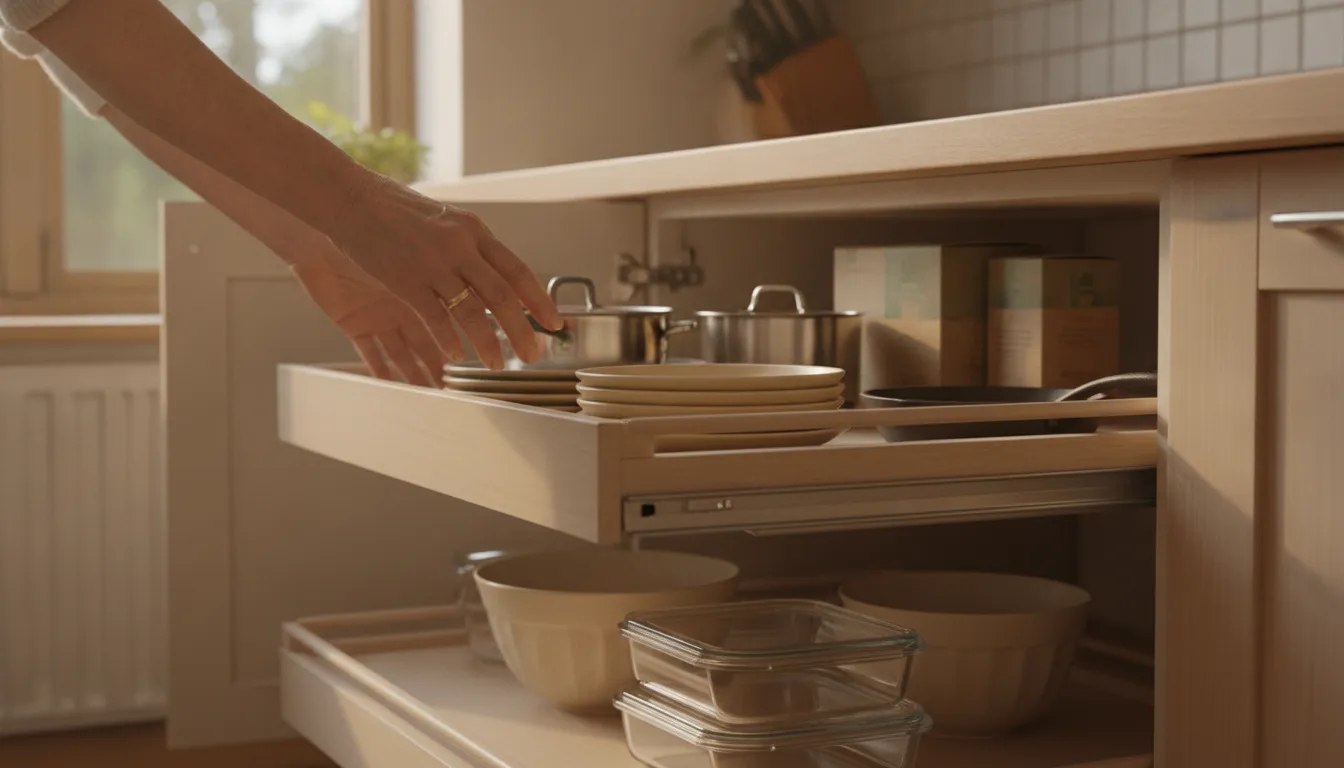
Shelf Proz builds custom-fit pull-out shelves and drawers for existing kitchen, bathroom, pantry, and garage cabinets. This is cabinet organization, not a kitchen remodel. A photo cannot confirm a fit. A center stile, a hinge, or a pipe can change the plan, so bring measurements and ask.
How to organize cabinets for aging in place
Start with a list, not a shopping trip. Open one cabinet and write down what you actually reached for in the last week. That short list is your daily zone. Everything else can wait.
The Agency for Healthcare Research and Quality tells people to store frequently used items on the lowest shelf, at waist level, and to avoid stools and chairs for high shelves. That advice is about falls, and it is the same idea behind a calmer cabinet. You can read the full home checklist in the AHRQ home safety checklist.
Use three zones and stick to them:
- Daily zone. Waist to about shoulder height. Mugs, everyday plates, the pan you cook in, medicine you take each day, and the towel you grab after a shower.
- Occasional zone. The shelf just above or just below the daily zone. The good platter, a backup set of sheets, or the mixer you use on weekends.
- Rare zone. The very top and the floor of a deep base cabinet. Holiday dishes, the big roasting pan, and spare bulk goods.
If you use a wheelchair or you sit to cook, the daily zone drops. Put those items where your hands rest when you are seated, and keep a clear path in front of the door. Do not assume a standard shelf height will match a seated reach.
Sort one cabinet before you buy anything
Work one cabinet at a time so the kitchen stays usable. Empty it onto the counter. Wipe the shelf. Then sort into three piles: use weekly, use sometimes, and do not use.
The weekly pile goes back first, in the daily zone. Group like with like so you are not hunting. Plates with plates. Coffee gear in one spot. Cleaning bottles together, never mixed with medicine or food.
The sometimes pile goes to the occasional zone, still in the same room if you can. The unused pile leaves the cabinet. Donate it, store it elsewhere, or throw it out. An organized cabinet that is still full will feel the same next month.
Give every item a home you can name. “The blue mug lives on the middle shelf, front left” is a plan. “Somewhere in the left cabinet” is how things creep back to the top shelf.
If bending is the hard part, do not empty a base cabinet onto the floor. Set a sturdy table or a rolling cart at your side and move items there. Stop when you are tired. A half-finished cabinet is fine for one day.
Place daily items where your hands already are
Heavy things belong low, but not so low that you have to kneel for them. A full pot, a stack of dinner plates, and a cast-iron pan should sit on a shelf you can reach with a small bend, not a deep squat. Light, rarely used boxes can go higher.
Keep the front of each shelf for the daily items. The back is where things disappear. If you cannot see it without moving three other things, it is in the wrong place. Slide the everyday item forward and put the spare behind it, or move the spare out.
Doors are useful too. A simple rack on the inside of a pantry or bathroom door can hold wraps, light tools, or extra towels. Do not hang anything so heavy that the hinge sags, and do not block the shelf behind the door.
Under the sink is its own problem. Pipes, a disposal, and a water filter eat the middle of the box. Store only what belongs there, and keep cleaners in a bin you can lift out in one motion. If the pipes already fill the cabinet, do not force a shelf into that space. Ask first.
Bathrooms need the same zones on a smaller scale. Daily medicine, a toothbrush cup, and the towel you use tonight stay between waist and shoulder. Extra bottles and guest towels can go higher. If a cabinet is above the toilet or over a tall vanity, treat that top shelf as rare storage, not as the home for something you need at night.
Use a one-move rule for the things you touch most
A good test is simple. To get the item you want, you should open the door and take it. You should not have to unload a stack, kneel, or drag a heavy box onto the counter first.
Try this pass on the cabinets you use before breakfast and before bed:
- Stand where you usually stand. Open the door. Notice the first thing you wanted.
- If that item was behind something else, swap them. The daily item comes forward.
- If you had to reach overhead or kneel, move it toward waist height, even if another item has to leave the cabinet.
- Close the door and repeat once tomorrow. If you still shuffle things, the layout is not done.
Labels help when more than one person uses the kitchen. A small label on a bin is enough. You do not need a matching set of containers for this to work. Clear bins let you see what is inside. Opaque bins need a word on the front.
The same rule applies in a pantry. The cereal, the oil, and the snacks you open every day stay at waist height. The 12-pack you bought on sale can sit on the floor or a high shelf, as long as the single box you open is in the daily zone. A backup does not earn a front-row spot.
Decide what a pull-out can change, and what it cannot
A fixed shelf keeps the back of a base cabinet in the dark. A pull-out shelf or drawer slides that storage toward you so you can see it without climbing into the box. That is the real change. It does not make a cabinet taller, and it does not remove a pipe.
Shelf Proz fits pull-out shelves and drawers to the cabinet you have. The height-adjustable Shelf Pro system, as the site describes it, uses shelves that move in 2-inch steps on a hanger and grid behind the door. Drawers are Baltic birch with dovetail joints. Grids are melamine with a Hard Rock Maple finish. Slides are heavy-duty stainless undermount. The site lists one rating for slides and a different rating for a fully extended shelf. Those numbers are not a promise for every product or every room. Ask which rating applies to the piece you are considering.
None of that means your cabinet is a match. A center stile, a hinge that swings into the opening, or plumbing under the sink can rule a pull-out out, or it can mean a different size. Do not remove cabinet parts to force a fit. Bring the question to a free consultation and let someone look.
A pull-out is one option among others. Sometimes the better move is a shorter stack of plates, a bin you can lift, or moving the heavy pan to a shelf you already reach. If the cabinet is fine and only the stuff is in the wrong place, reorganizing is the whole project.
| Situation | Try first | Ask about a pull-out when |
|---|---|---|
| Daily mug is on the top shelf. | Move it to waist height and shift rare items up. | You still cannot see the everyday items after you sort. |
| Pans are stacked in a deep base cabinet. | Keep one daily pan in front and store the rest behind or elsewhere. | You still kneel and unload the cabinet to reach the pan you use. |
| Bathroom bottles crowd the vanity. | Keep tonight’s items up front and move extras out. | The box is deep and you cannot see the back without bending in. |
| Under-sink cleaners sit on the pipe. | Use a bin you can lift out, and keep food out of that cabinet. | Only after someone checks the pipes, the hinge, and the opening. |
| Pantry boxes are mixed by sale price, not by use. | Put this week’s food at waist height and park backups higher or lower. | You want the back of a deep pantry shelf to come forward. |
If you want the product details, read the pages on pull-out shelves and height-adjustable pull-out shelves. Kitchen layout ideas live on the kitchen organization page, and bathroom cabinets have their own notes on bathroom cabinet organization. Those pages describe the work. They do not confirm that your cabinet will fit a specific shelf.
Set the rare items aside on purpose
Aging in place does not mean every dish stays in the kitchen. The turkey roaster, the punch bowl, and the extra slow cooker can live in a hall closet, a garage shelf, or a labeled bin on a rare shelf. You will use them a few times a year. They should not block Tuesday’s pan.
Do the same with paper goods and bulk food. Keep one open package where you can reach it. Store the sealed backup somewhere else, even if that place is less convenient. Convenience is for the item in your hand today.
Share the plan with anyone else who cooks or cleans. If one person puts the plates back on the top shelf out of habit, the zones will not last. A two-minute walk-through after you finish a cabinet is enough.
Recheck the zones twice a year, or after a change in what you cook, what you take, or how you move. A cabinet that worked last spring can fill up again after the holidays. The method is the same each time: weekly items forward and at waist height, rare items out of the way.
What to have ready before you ask about a shelf
If sorting is not enough, a consultation is the next step. Shelf Proz serves homeowners and leads with kitchens and bathrooms, then pantry storage, then garages. Priority areas include Las Vegas, Henderson, Lake Havasu City, Kingman, Bullhead, and Laughlin. Those cities are targets, not a promise that every address is covered. Bring your city or ZIP and ask.
Have these ready so the conversation is about your cabinet, not a guess:
- The room and which cabinet: kitchen base, pantry, bathroom vanity, or garage.
- A width, height, and depth in inches, measured inside the opening, plus a photo with the door open.
- Notes on anything in the way: a center stile, a hinge, a pipe, a drawer glide, or a shelf pin.
- What you want in the daily zone, and whether you stand or sit to reach it.
- Whether you want a shelf, a drawer, or only advice on placement.
Prices depend on size, materials, quantity, and finish. Grids and slides are separate from the drawer, shipping is extra, and installation is extra. There is no single project price on this page. Ask for a free estimate if you want numbers. The materials warranty on drawers, slides, and grids has terms you can request. It is not a promise that covers labor or every service.
You do not need to decide on hardware before you call. Many cabinets only need a better layout. If a pull-out does make sense, the measurements decide the size, not a catalog photo.
FAQ
Where should everyday dishes go?
Put them between your waist and your shoulders, at the front of the shelf. The AHRQ checklist points to waist level for items you use often, and it warns against climbing on a chair. Rare serving pieces can move up or out of the kitchen.
Do I have to add pull-out shelves?
No. Start by moving daily items forward and to waist height. Consider a pull-out only if you still cannot see or lift what you use without unloading the cabinet. A fit is not guaranteed. Ask with measurements and photos.
What if bending down is the hard part?
Keep heavy daily items off the floor of the cabinet and off the highest shelf. Use a cart or a table while you sort so you are not stacking things at your feet. If you sit to cook, lower the daily zone to a seated reach and say so at a consultation.
Can every existing cabinet take a pull-out?
No. Hinges, a center stile, and plumbing can all get in the way. Shelf Proz looks at the cabinet you have and does not treat a pull-out as a sure fit. Bring the opening size and a photo of the inside.
Does this cover the bathroom and the pantry too?
Yes. Use the same three zones. In a bathroom, keep tonight’s items at easy reach and move extras up. In a pantry, keep this week’s food at waist height and park backups elsewhere. Garage storage can follow the same idea, after kitchens and bathrooms.
Want a second set of eyes on a cabinet that still feels hard to use? Book a free consultation today, or call (928) 418-5535. Bring your city or ZIP, a photo, and the inside measurements. Paul Porreca reviews new posts before they go live, and a consultation is how you confirm what your cabinet can take.